Gulf Coast humidity and long, warm seasons accelerate parasite breeding cycles across Harris County, creating conditions where single-zone treatments routinely fail. Flea pupae can remain dormant inside subflooring and…
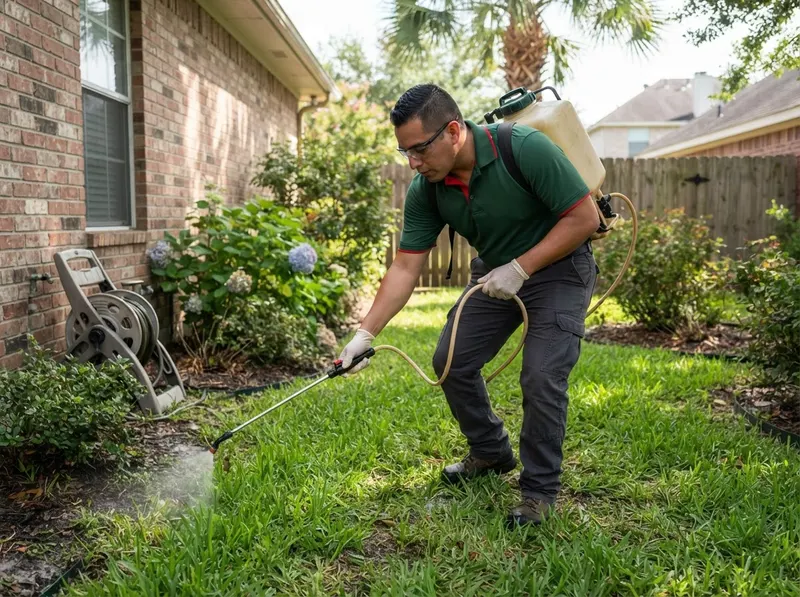
Gulf Coast humidity and long, warm seasons accelerate parasite breeding cycles across Harris County, creating conditions where single-zone treatments routinely fail. Flea pupae can remain dormant inside subflooring and carpet fibers for up to 140 days, emerging in response to carbon dioxide and physical vibrations. Meanwhile, shaded landscaping, mulch beds, and St. Augustine lawns harbor tick nymphs carried into residential neighborhoods by opossums, raccoons, and feral cats. In established communities like Oak Forest and The Heights, mature oak canopies sustain shaded ground moisture, whereas properties in Memorial, River Oaks, and Kingwood often border bayou channels and dense greenbelts that continuously reintroduce wildlife-vectored parasites.
Eradication requires interrupting the parasite life cycle simultaneously inside the structure and across the perimeter perimeter grounds. Interior treatments combine adulticides with specialized insect growth regulators (IGRs) like pyriproxyfen, which prevent immature larvae from morphing into biting adults. Outdoor operations establish a non-repellent ground barrier across turfgrass, beneath deck floorings, and throughout ornamental plant beds up to 100 feet from the foundation. The trade-off between spot applications and full dual-zone eradication is structural durability: treating only an indoor infestation leaves outdoor hosts untouched, causing re-infestation within two to three weeks, while isolated yard sprays leave resting indoor pupae free to repopulate living rooms.
Preparation directly determines eradication efficacy. Homeowners must complete three concrete steps prior to service arrival: first, thoroughly vacuum all carpets, tile crevices, and baseboard junctions to prompt dormant pupae to emerge from their protective cocoons; second, wash all pet bedding in water exceeding 130 degrees Fahrenheit; third, mow the turfgrass to a height under 3 inches to maximize direct soil penetration. Occupants and pets must vacate the home during application and remain off treated surfaces for a minimum of 2 to 4 hours until all formulations are completely dry. Once dried, modern synthetic pyrethroid and juvenile hormone formulations bond to foliage and carpet fibers, maintaining residual defense through high humidity.
Every job gets a firm, written price after a free on-site visit.
Tell us about your flea and tick yard and interior extermination job in Houston and we'll send a clear, written quote, usually the same day.
 Homestead Pest Control